A toothache often feels worse at night because lying down adds pressure and there is nothing to distract you. Rinse with warm salt water, floss gently, use a cold compress, take an over the counter pain reliever if it is safe for you, and sleep with your head raised. Spreading swelling, fever or trouble breathing or swallowing needs care right away.
- Lying flat can make a sore tooth throb harder at night.
- Warm salt water, gentle flossing and a cold compress are safe first steps.
- Never put aspirin directly on the tooth or gums.
- Spreading swelling, fever or trouble swallowing means get care right away.
- A toothache that fades can still mean an infection that needs treatment.
Toothaches have a way of getting worse right when the lights go out. During the day you are busy and distracted. At night, lying down, the throbbing gets louder, and there is nothing to do but count the hours until the dental office opens.
Here is why tooth pain often flares at night, safe ways to get relief until morning, the warning signs that mean you should not wait, and what happens when you come in.

Why Tooth Pain Gets Worse at Night
There are a few reasons a toothache can feel worse after dark:
- Lying flat sends more blood toward your head, which can increase pressure around an inflamed tooth and make it throb.
- Fewer distractions. With nothing else going on, your brain focuses on the pain.
- Clenching or grinding during sleep can put extra pressure on a sore tooth.
Night pain is worth taking seriously. Pain that wakes you up or keeps you from sleeping is often a sign that the inside of the tooth, where the nerve lives, is inflamed or infected.

Relief You Can Try Tonight
These steps build on the American Dental Association’s advice for toothaches, which starts with rinsing and gentle flossing, and can help you get through the night:
- Rinse your mouth with warm water to clean it out. A little salt dissolved in the water can be soothing.
- Floss gently around the sore tooth. Sometimes a trapped piece of food is pressing on the gum and causing the pain.
- Use a cold compress on the outside of your cheek for 15 to 20 minutes at a time if there is any swelling.
- Take an over the counter pain reliever as directed on the label, if it is safe for you. Ask a pharmacist if you are unsure what you can take with your other medications.
- Sleep with your head raised on an extra pillow or two.
- Avoid very hot, very cold and sugary food and drinks, which can trigger sharp pain.
Do not put aspirin or any painkiller directly on the tooth or gums. The ADA specifically says not to put aspirin on the aching tooth or gum tissue, and it can burn the gums. And do not try to pop or drain a swollen bump on your gum yourself.

When You Should Not Wait Until Morning
Most toothaches can wait until the office opens. Some cannot. Get emergency medical care right away if you have:
- Swelling in your face or jaw that is spreading, especially toward your eye or neck
- A fever along with tooth pain or swelling
- Trouble breathing or swallowing
- A serious injury to your mouth or face
These can be signs of a spreading infection, which needs attention right away. An emergency room can treat the infection and the pain, and then a dentist treats the tooth itself.
Call our Reseda office first thing in the morning. Tell us it is urgent, and we will let you know how soon we can see you.
What Usually Causes a Bad Toothache
- A deep cavity that has reached the inner part of the tooth
- An abscess, a pocket of infection at the root tip or in the gum, often with throbbing pain, a bump on the gum, a bad taste or swelling
- A cracked tooth, which often hurts when you bite down or release
- A lost filling or crown that has left the inside of the tooth exposed
- Gum infection around a tooth, including a wisdom tooth that is partly through the gum
- Grinding or clenching, which can make teeth and jaw muscles ache
Each of these is treated differently, which is why an exam and an x ray are the first step. Guessing at the cause at home usually just delays the right fix.
What Happens at Your Visit
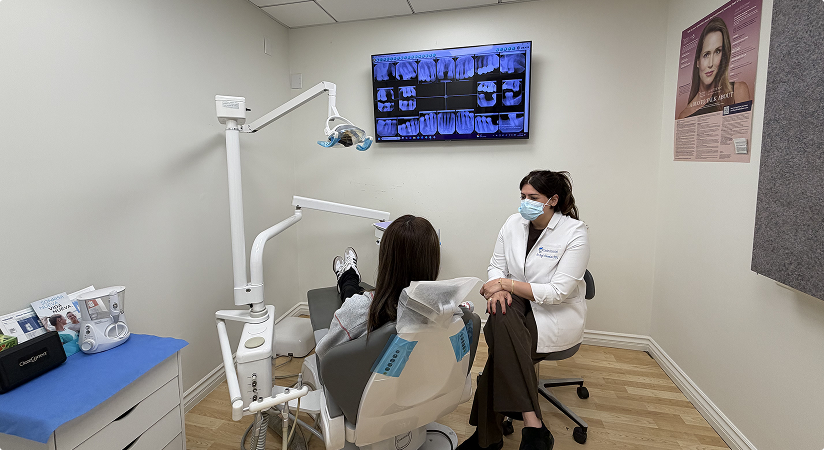
When you come in with a toothache, the first goal is to find the cause and get you out of pain. We examine the tooth, check your bite and usually take an x ray to see what is happening below the surface.
Depending on what we find, treatment might be a filling, root canal therapy to save an infected tooth, a crown for a cracked tooth, or in some cases a tooth extraction. We explain your options and the cost before anything starts.
If you are nervous, tell us when you call. We will take things at your pace and make sure the area is numb before any treatment.
How to Prevent the Next Toothache
Most severe toothaches start as small problems that did not hurt yet. A few habits keep them from getting that far:
- Keep your checkups. Cavities and cracks found early are simple to fix, long before they reach the nerve.
- Brush twice a day with fluoride toothpaste and floss daily to keep plaque from causing decay along the gumline and between teeth.
- Do not ignore early warning signs like sensitivity to sweets, hot or cold, or a tooth that feels different when you bite.
- Protect your teeth at night with a custom night guard if you clench or grind.
- Replace lost fillings or crowns quickly, before the exposed tooth starts to hurt.
A Toothache That Goes Away Is Not Always Good News
Sometimes a toothache fades on its own after a few days. That can feel like a relief, but it can also mean the nerve inside the tooth has died, while the infection behind it is still there. That is why any severe toothache should be checked, even if it eases up.
Call our Reseda office and describe your symptoms. We will tell you how soon you need to be seen.
Frequently asked questions
Why does my toothache hurt more at night?
Lying down increases blood flow toward your head, which can add pressure around an inflamed tooth. There are also fewer distractions at night, and some people clench their teeth in their sleep.
How can I stop a toothache at night?
Rinse with warm salt water, floss gently around the tooth, use a cold compress for swelling, take an over the counter pain reliever as directed if it is safe for you, and sleep with your head raised.
Should I put aspirin on my sore tooth?
No. Putting aspirin or any painkiller directly on the tooth or gums can burn the tissue. Swallow pain relievers as directed instead.
When is a toothache an emergency?
Get care right away for spreading facial swelling, fever, trouble breathing or swallowing, or a serious injury. Otherwise, call your dentist as soon as the office opens.
Can a tooth infection go away on its own?
No. Pain may fade if the nerve dies, but the infection usually stays and can spread. An infected tooth needs treatment.
What will the dentist do for a toothache?
We examine the tooth and usually take an x ray to find the cause. Treatment may be a filling, root canal, crown or extraction, and we explain your options before starting.
Sources: ADA MouthHealthy: Dental Emergencies. This article is general information, not a diagnosis. Your dentist can tell you what fits your own teeth.

