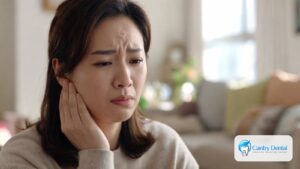
Most jaw pain comes from the jaw joint and chewing muscles (TMD), from clenching or grinding, or from a tooth problem such as an infection or a crack. Soft foods, warm or cold packs and resting the jaw help muscle pain. Pain that keeps coming back, swelling or pain when biting needs an exam, and jaw pain with chest pain or shortness of breath means call 911.
- Jaw pain can start in the joint, the chewing muscles or a tooth.
- Clenching and grinding are common causes, and a night guard can help.
- Tooth problems need an exam. They do not go away by resting the jaw.
- Jaw pain with chest pain or shortness of breath is a 911 call.
- Pain that lasts more than a week or two deserves a visit.
Jaw pain has a way of showing up everywhere: when you chew, when you yawn, when you wake up, even as a headache or an earache that does not seem to have anything to do with your teeth. Sometimes it fades in a day or two. Sometimes it keeps coming back.
Here is what usually causes jaw pain, the signs that point to each cause, what you can safely try at home, and when it is time to have Dr. Angel take a look at our Reseda office.

Where Jaw Pain Comes From
Your jaw is hinged to your skull by two small joints, one in front of each ear, called the temporomandibular joints. Strong chewing muscles open and close your mouth around them. Pain can start in the joints, in those muscles, or in a tooth or the gum around it, which is why the same ache can have very different causes.
The National Institute of Dental and Craniofacial Research (NIDCR) groups problems of the jaw joint and chewing muscles under one name: temporomandibular disorders, or TMD. It is the most common reason for ongoing jaw pain that is not caused by a tooth.
TMD: Problems With the Jaw Joint and Muscles
According to the NIDCR, TMD can cause pain in the jaw, the face, around the ear and in the temples, along with a few other signs:
- Pain or tenderness when you chew, talk or open wide
- Clicking, popping or grating sounds when you open or close your mouth
- A jaw that feels stiff, tired or locks open or closed
- Headaches, earaches or pain that spreads to the neck
- A bite that suddenly feels different
The exact cause is not always clear. Injury, arthritis and stress can all play a part, and many people find that symptoms come and go over months. The good news from the NIDCR is that, for many people, TMD symptoms improve on their own or with simple, conservative care.

Clenching and Grinding (Bruxism)
Many people clench or grind their teeth without knowing it, often at night or during stressful moments. Hours of clenching overwork the chewing muscles, and you feel it as a tight, sore jaw in the morning, a dull headache at the temples, or teeth that feel sensitive or worn.
A custom night guard is one of the simplest ways to protect your teeth and give those muscles a break. You can read how ours are made on our night guards page.
A quick exam shows whether grinding is wearing your teeth and whether a night guard would help.

When the Pain Is Really a Tooth
Not all jaw pain is about the joint. A tooth can send pain along the whole jaw, and so can the gums around it. Common dental causes include:
- A deep cavity or a cracked tooth
- An infection or abscess at the root of a tooth, often with swelling
- A wisdom tooth that is coming in or is stuck under the gum
- Gum disease around a back tooth
- A filling or crown that sits a little too high and throws off your bite
These usually come with clues: pain when you bite on one spot, sensitivity to hot or cold, swelling, or a bad taste. Dental pain does not go away by resting your jaw, so it needs an exam. If the pain is severe or you have swelling, our emergency dentistry team can usually see you quickly.
When Jaw Pain Is an Emergency
The American Heart Association lists pain in the jaw as one of the warning signs of a heart attack, especially when it comes with chest pain or pressure, shortness of breath, a cold sweat, nausea or lightheadedness. If jaw pain comes with any of these, call 911 right away. Do not wait to see a dentist.
Also get help quickly if your jaw is locked and you cannot open or close your mouth, if you have a fever with facial swelling, or if the pain started after a fall or a blow to the face.
What You Can Try at Home
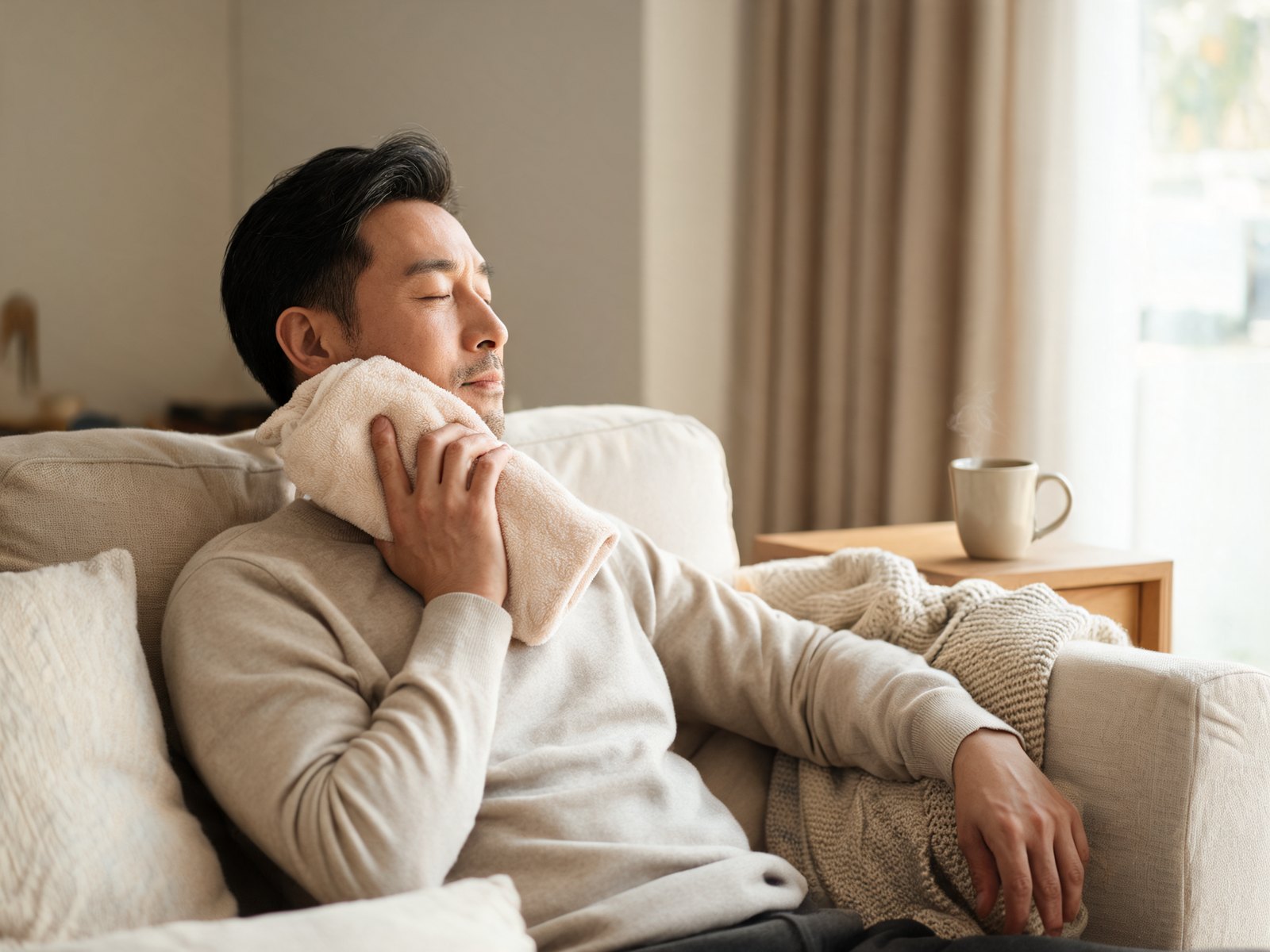
For jaw pain from the joint or muscles, Mayo Clinic and the NIDCR both recommend starting with simple, reversible self care:
- Eat soft foods for a few days and cut food into small pieces. Skip gum and very chewy foods.
- Use warm or cold packs on the sore side for short periods.
- Avoid wide yawning and big bites while the jaw is sore.
- Notice clenching during the day. Lips together, teeth apart is the relaxed position for your jaw.
- Over the counter pain relievers can help short term. Follow the label and ask your doctor if you are unsure.
If the pain is not improving after a week or two, keeps coming back, or comes with any of the dental signs above, it is time for an exam.
How We Help With Jaw Pain at Canby Dental
Every visit for jaw pain starts by finding the cause. Dr. Angel checks your teeth and gums, looks at how your bite comes together, feels the jaw joints and chewing muscles, and takes X-rays if a tooth could be involved. From there the plan depends on what we find:
- A tooth problem, such as a cavity, crack or infection, is treated directly, which usually ends the jaw pain.
- Grinding or clenching is often managed with a custom night guard and a few daily habits.
- Muscle related TMD pain may benefit from conservative care first. For some patients with tight, overworked chewing muscles, therapeutic Botox injections are another option to discuss.
- Joint problems that need more care are referred to the right specialist.
Call (818) 343 4024 or send us a message, and we will find out what is behind it.
Frequently asked questions
What is the most common cause of jaw pain?
Problems with the jaw joint and chewing muscles, called temporomandibular disorders or TMD, are a very common cause, along with clenching or grinding. Tooth problems such as an infection or a cracked tooth can also cause jaw pain.
Can a tooth problem cause jaw pain?
Yes. A deep cavity, a cracked tooth, an abscess or an erupting wisdom tooth can all send pain along the jaw. Pain when biting on one spot, sensitivity or swelling point to a dental cause.
Does jaw clicking mean something is wrong?
Clicking without pain is common and often harmless. Clicking with pain, a jaw that locks, or trouble opening wide is worth an exam.
Will a night guard help jaw pain?
If the pain comes from clenching or grinding, a custom night guard protects your teeth and can reduce the strain on your jaw muscles. An exam tells us whether grinding is part of the problem.
When is jaw pain an emergency?
Call 911 if jaw pain comes with chest pain, shortness of breath, a cold sweat, nausea or lightheadedness, since these can be signs of a heart attack. Get dental care quickly for facial swelling with fever or a jaw that is locked.
Sources: NIDCR: TMD (Temporomandibular Disorders); Mayo Clinic: TMJ disorders, diagnosis and treatment; American Heart Association: Warning signs of a heart attack. This article is general information, not a diagnosis. Your dentist can tell you what fits your own teeth.