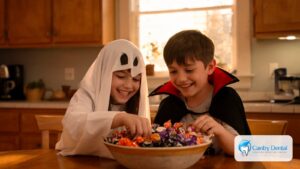
Halloween candy is fine in moderation. How often kids snack matters more than how much, so let them enjoy candy at set times, ideally right after meals, then drink water and brush with fluoride toothpaste before bed. Sticky, hard and sour candy are the hardest on teeth.
- How often kids eat sugar matters more than how much.
- Candy right after a meal is easier on teeth than grazing all day.
- Sticky, hard and sour candy are the worst for teeth.
- Water after candy and brushing before bed make a big difference.
- Parents too: be careful biting hard candy with crowns or fillings.
Around this time of year, a lot of parents wonder the same thing: how worried should I be about Halloween candy? The honest answer is less than you might think, as long as you have a plan. One night of trick or treating is not going to ruin anyone’s teeth. What matters is what happens with the pile of candy over the next few weeks.
Here is a realistic, no lecture plan for Halloween that keeps the fun in and keeps cavities out.
- It Is Not Just How Much Sugar, It Is How Often
- The Best and Worst Halloween Candy for Teeth
- A Simple Plan That Works
- Brushing and Flossing Matter Even More This Month
- Fun Treats That Are Not Candy
- A Helpful Habit for Older Kids and Adults
- Do Not Forget the Grown Ups
- Extra Protection: Sealants and Fluoride
- Signs of a Cavity to Watch For
- Frequently asked questions
It Is Not Just How Much Sugar, It Is How Often
Cavities form when the bacteria in plaque feed on sugar and make acid, and that acid attacks tooth enamel. Every time your child eats something sugary, their teeth get an acid attack that can last a while afterward. The American Dental Association explains that the stickiness of plaque keeps those acids in contact with the teeth, and over time the enamel can break down.
That means a handful of candy eaten all at once is usually easier on teeth than the same candy nibbled one piece at a time all afternoon. Grazing keeps the teeth under attack for hours, which is why the ADA’s advice for preventing cavities includes limiting snacking.
The Best and Worst Halloween Candy for Teeth
Easier on teeth
- Plain chocolate melts and washes away from teeth fairly quickly.
- Sugar free gum, which can help by getting saliva flowing.
- Small, quick treats that are eaten and gone.
Harder on teeth
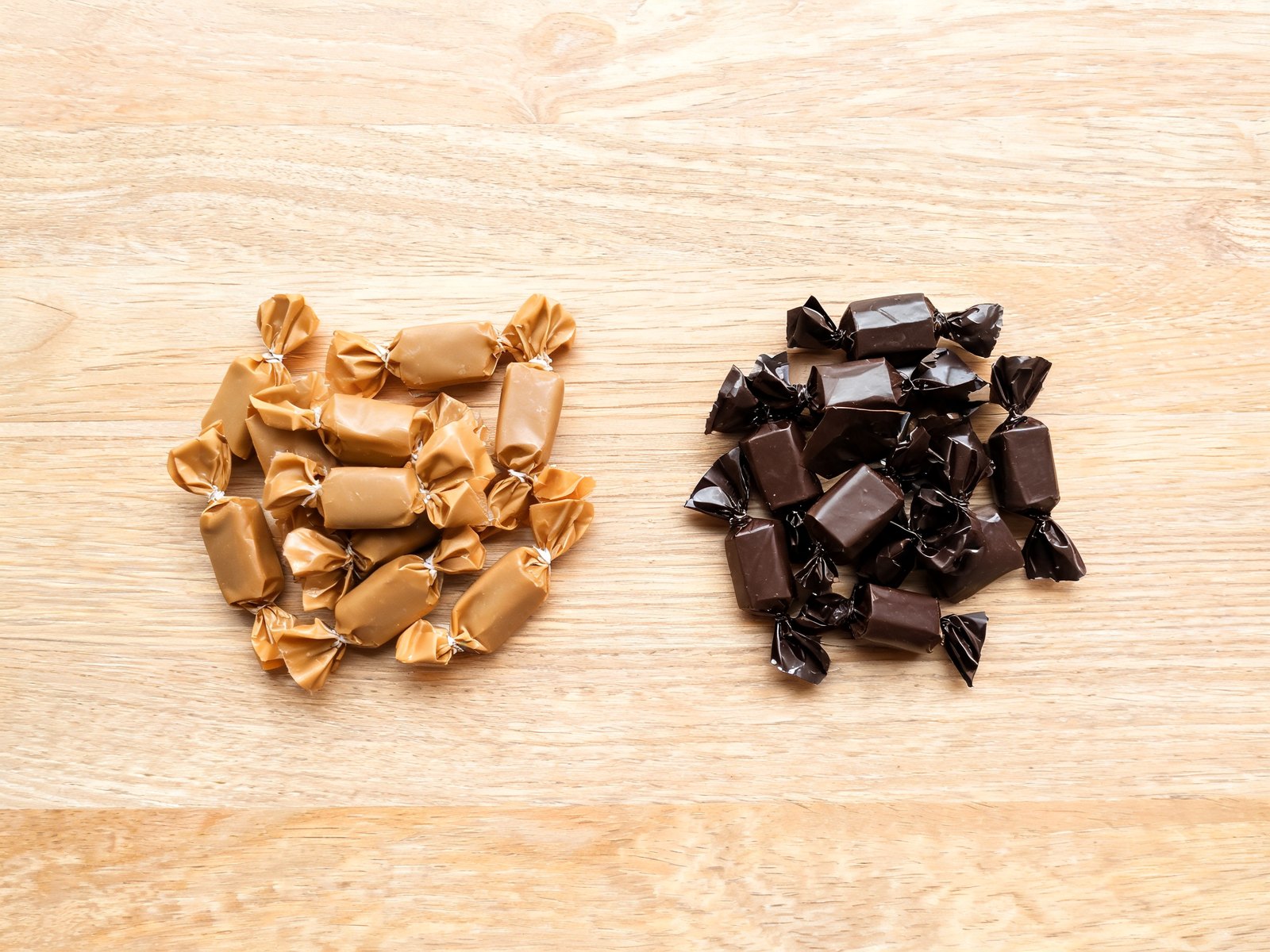
- Sticky and chewy candy like caramels, taffy and gummies, which cling to teeth and get stuck in grooves.
- Hard candy and lollipops, which sit in the mouth for a long time and can crack a tooth if bitten.
- Sour candy, which is acidic on its own and adds to the acid attack.
- Sugary drinks and juice, which bathe every tooth at once.
The weeks after Halloween are a great time for a cleaning and a quick check for early cavities.

A Simple Plan That Works
- Eat a good meal before trick or treating so kids are not filling up on candy.
- Let them enjoy the night. Sorting and trading the haul is half the fun.
- Set a candy time afterward, ideally right after a meal, when there is more saliva in the mouth to help wash sugar and acid away.
- Pick a few favorites and set the rest aside. Some families trade extra candy for a small toy or an outing.
- Water after candy. A glass of water, ideally fluoridated tap water, helps rinse sugar off teeth.
- Brush before bed, every night. Two minutes with fluoride toothpaste, and no more snacks after brushing.

Brushing and Flossing Matter Even More This Month
The ADA recommends brushing twice a day with fluoride toothpaste and cleaning between the teeth once a day. For kids, that means:
- Under age three, a smear of fluoride toothpaste about the size of a grain of rice.
- From age three, a pea sized amount.
- Help with brushing until your child can do a thorough job on their own, usually around age six or seven.
- Flossing once a day, especially after sticky candy that gets wedged between teeth.
If you are not sure your child’s technique is good enough, bring it up at their next visit. We are happy to show both of you. Our guide to your child’s first dental visit also covers daily care for little ones.
Fun Treats That Are Not Candy
If you are handing out treats this year, a few non candy options go over surprisingly well with kids, and they are a nice choice for children with food allergies too:
- Stickers, temporary tattoos or glow sticks
- Small toys like bouncy balls, mini puzzles or spinning tops
- Pencils, erasers or mini notebooks
- Bubbles or small packs of crayons
Mixing a few of these into your bowl means less candy in the house after Halloween, too.
A Helpful Habit for Older Kids and Adults
Chewing sugar free gum for a little while after a meal or a treat gets saliva flowing, and saliva is the mouth’s natural rinse. It helps wash away sugar and neutralize acid. It does not replace brushing, but it is an easy habit for older kids and adults, especially when brushing is not an option.
Do Not Forget the Grown Ups
The office candy bowl and the leftover bag in the pantry count too. The same rules apply to adults: enjoy a treat with a meal instead of grazing all day, drink water after, and be careful with hard candy if you have crowns, fillings or veneers, since biting down on something hard is a common way to crack a tooth or dental work. Letting hard candy dissolve instead of crunching it is a small habit that can save a tooth.
Extra Protection: Sealants and Fluoride
The ADA’s advice for preventing cavities includes asking your dentist about two extra layers of protection, which are especially useful for kids:
- Dental sealants are a thin protective coating painted onto the chewing surfaces of the back teeth, where the deep grooves trap food and sticky candy.
- Fluoride strengthens enamel. Fluoride toothpaste is the everyday version, and your dentist can tell you whether your child would benefit from extra fluoride.
Both are quick and painless, and they make a real difference in the years when kids are still learning to brush well.

Signs of a Cavity to Watch For
Early cavities usually do not hurt. As they grow, you might notice:
- White or brown spots on the teeth, especially near the gumline
- Sensitivity to sweets, hot or cold
- Your child avoiding chewing on one side
- A tooth that hurts when they bite down
Small cavities are simple to fix. Bigger ones take more work, which is why regular checkups every six months matter so much for kids.
Canby Dental welcomes patients of all ages. Call our Reseda office to schedule cleanings for the whole family.
Frequently asked questions
Is Halloween candy bad for kids’ teeth?
In moderation, it is fine. What matters most is how often kids snack on sugar. Eating candy at set times, ideally after meals, is much easier on teeth than grazing all day.
What is the worst Halloween candy for teeth?
Sticky and chewy candy, hard candy and lollipops, and sour candy are the hardest on teeth. Plain chocolate washes away more easily.
When is the best time for kids to eat candy?
Right after a meal, when there is more saliva in the mouth to help wash away sugar and acid.
Should kids brush right after eating candy?
Drinking water right after candy is a great habit. The most important brushing is before bed, with fluoride toothpaste and no snacks afterward.
How much fluoride toothpaste should my child use?
A smear the size of a grain of rice for children under three, and a pea sized amount from age three.
Does Canby Dental see kids?
Yes. Canby Dental is a family dental office in Reseda that welcomes patients of all ages. Call (818) 343 4024 to book.
Sources: ADA MouthHealthy: Cavities. This article is general information, not a diagnosis. Your dentist can tell you what fits your own teeth.