
A small, painless chip can usually wait a few days, but pain, bleeding, swelling, a large missing piece or a pink spot in the break means you should call a dentist right away. Rinse with warm water, save any pieces in milk, use a cold compress, and call Canby Dental.
- Pain, bleeding, swelling or a pink spot in the break are signs to call right away.
- A small painless chip is not an emergency, but enamel does not grow back.
- Save broken pieces in milk. Sometimes they can be bonded back on.
- Repairs range from smoothing and bonding to fillings, crowns or a root canal.
- Mouthguards and night guards prevent many broken teeth.
It usually happens at the worst moment. You bite down on an olive pit, a popcorn kernel or a fork, and something feels wrong. Your tongue finds a sharp edge where there was not one before. Now you are standing in front of the bathroom mirror wondering how bad it is and whether you need to call a dentist tonight or can wait until next week.
The answer depends on a few clear signs. Here is how to tell a cosmetic chip from a real emergency, what to do in the first hour, and how we usually repair each kind of break.

First, Look for These Warning Signs
A chipped tooth becomes urgent when the damage goes past the outer enamel. Call us right away if you notice any of the following:
- Strong or throbbing pain, especially pain that does not settle after a few minutes
- A pink or red spot in the middle of the broken area, which can mean the nerve is exposed
- Bleeding from the tooth or gums that will not stop
- Swelling in your face, gums or jaw
- A tooth that is loose, pushed out of position, or knocked out completely
- A large piece missing, such as a corner of a molar or half of a front tooth
These are the cases where waiting can turn a simple repair into a root canal or worse. Our guide to emergency dental care in Reseda covers the other urgent problems we see, from abscesses to knocked out teeth.
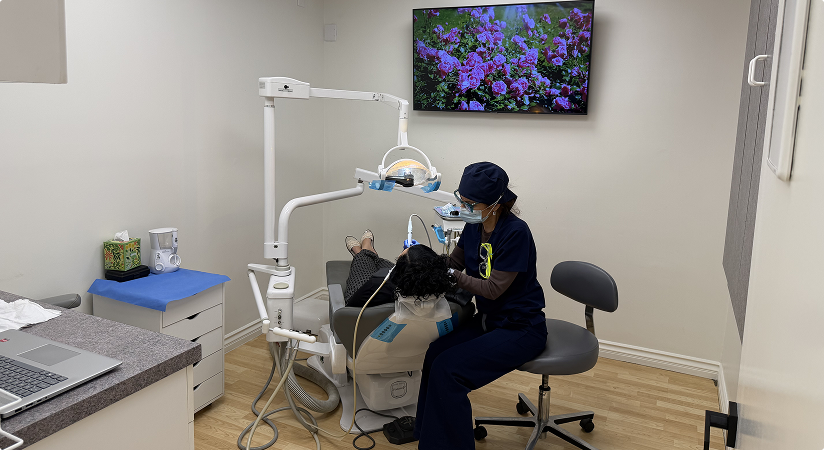
When a Chip Can Wait a Few Days
A small chip on the edge of a front tooth that does not hurt, does not bleed and is not sensitive is usually not an emergency. It still deserves a visit, ideally within a few days, because enamel does not grow back. A small chip can catch food, crack further or wear down the tooth next to it.
The same goes for a tooth that feels a little rough but looks normal. Call during office hours and we will find a time that works for you.
Call us. Two minutes on the phone tells us whether you need to come in today or can safely wait for a regular appointment.

What to Do in the First Hour
Whatever kind of break you have, these steps protect the tooth until you can be seen. They follow the American Dental Association’s advice for dental emergencies.
- Rinse your mouth gently with warm water to clean the area.
- Save any pieces you find. Keep them moist, ideally in a little milk, and bring them with you. Sometimes a fragment can be bonded back on.
- Put a cold compress on your face over the injured area to keep swelling down.
- Cover a sharp edge with a small piece of sugarless gum or dental wax so it does not cut your tongue or cheek.
- Take an over the counter pain reliever if you need one, following the label.
- Call your dentist. Describe what happened, whether there is pain or bleeding, and what the tooth looks like.
If a permanent tooth is knocked out completely, time matters most. The ADA recommends keeping it moist at all times, trying to place it back in the socket without touching the root, or holding it in milk, and getting to a dentist right away.

How We Repair Chipped and Broken Teeth
The right repair depends on how much tooth is gone and whether the nerve is involved. Here are the usual options, from smallest to largest.
Smoothing and polishing
A tiny chip on an edge can sometimes be smoothed so it is no longer sharp. This takes a few minutes and often needs no numbing.
Dental bonding
For small to medium chips, especially on front teeth, dental bonding rebuilds the missing part with tooth colored material shaped and polished to match. It is usually done in one visit.
Fillings and onlays
A break on a back tooth that removes part of the chewing surface may be repaired with a filling or a larger restoration that covers the damaged area.
Crowns
When a large piece of the tooth breaks off, a dental crown covers and protects what is left so it can keep working for years.
Root canal treatment
If the break reaches the nerve, a root canal cleans out the inflamed tissue and saves the tooth, which is then usually protected with a crown.
What Happens When You Come In
When you arrive with a chipped or broken tooth, the first goal is to make you comfortable and find out exactly how deep the damage goes. We look at the tooth, check your bite, and usually take an x ray. The x ray shows things a mirror cannot, such as a crack running toward the root or an injury to the nerve.
Once we know what we are dealing with, we explain your options and what each one costs before any work starts. Many small repairs, such as smoothing or bonding, can often be finished in the same visit. Larger repairs like a crown may take a second appointment, and we protect the tooth in the meantime so it does not break further.
If you are nervous about dental work, tell us when you call. We will take things at your pace, explain each step before we do it, and make sure the area is numb before any repair.
How to Avoid the Next Chip
Many broken teeth come from a handful of everyday habits:
- Chewing ice, hard candy or popcorn kernels
- Using teeth to open packages or bottles
- Grinding or clenching at night
- Playing sports without a mouthguard
If you wake up with a sore jaw or your partner hears you grinding, a custom night guard protects your teeth while you sleep.
Call our Reseda office and tell us what happened. We will let you know how soon we need to see you and what the repair will likely involve.
Frequently asked questions
Is a chipped tooth a dental emergency?
It is urgent if there is strong pain, bleeding, swelling, a large piece missing, or a pink or red spot in the break. A small painless chip can usually wait a few days, but should still be checked.
Can a chipped tooth heal on its own?
No. Enamel does not grow back, so a chip stays a chip. Small ones can be smoothed or bonded, and larger ones need a filling or crown.
What should I do with the broken piece of tooth?
Rinse it gently, keep it moist in a little milk, and bring it to your appointment. Sometimes it can be bonded back on.
How much does it cost to fix a chipped tooth?
It depends on the repair. Smoothing or bonding is at the low end, a crown or root canal costs more. We explain your options and the cost before any work starts.
Can I eat with a chipped tooth?
Stick to soft foods and chew on the other side until it is repaired. Avoid very hot, very cold and hard foods, which can cause pain or make the break worse.
What if I break a tooth on the weekend?
Follow the first hour steps: rinse, save any pieces, use a cold compress and cover sharp edges. If there is severe pain, heavy bleeding or swelling, get care right away. Otherwise call our office as soon as we open.
Sources: ADA MouthHealthy: Dental Emergencies. This article is general information, not a diagnosis. Your dentist can tell you what fits your own teeth.

