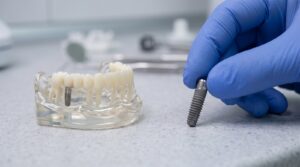
A dental implant is a three part replacement tooth: a titanium post that your jawbone grows onto, a small connector, and a custom crown. Because the post acts like a root, it keeps the jawbone healthy and stands on its own without touching the teeth next to it. Most healthy adults qualify, and a scan shows whether you have enough bone.
- An implant has three parts: the post, the abutment and the crown.
- Your jawbone grows directly onto the titanium post, which is why implants are so stable.
- Implants keep stimulating the jawbone, which helps prevent the bone loss that follows a missing tooth.
- There is no upper age limit. Healthy bone, healthy gums and reasonably controlled health matter most.
- Once healed, you brush and floss an implant like a natural tooth.
Somewhere between the coffee shops on Sherman Way and the dinner tables of Northridge, the same conversation keeps happening. Someone mentions they are getting a dental implant, and someone else nods along politely while quietly wondering what that actually means. A screw in your jaw? A fake tooth? Surgery? All of the above?
Fair questions. Implants have become the standard answer for missing teeth, yet most people could not sketch one on a napkin. So here is the napkin sketch, in plain English: what the parts are, why your jawbone welcomes a piece of titanium like an old friend, who makes a good candidate, and what daily life with an implant feels like. No sales pitch, just the anatomy lesson your dentist wishes you got before the appointment.
Curious whether an implant would work for your smile? The fastest way to find out is a short exam and a scan. Call our Reseda office at (818) 343-4024 and we will give you an honest answer either way.
The Three Parts of a Dental Implant
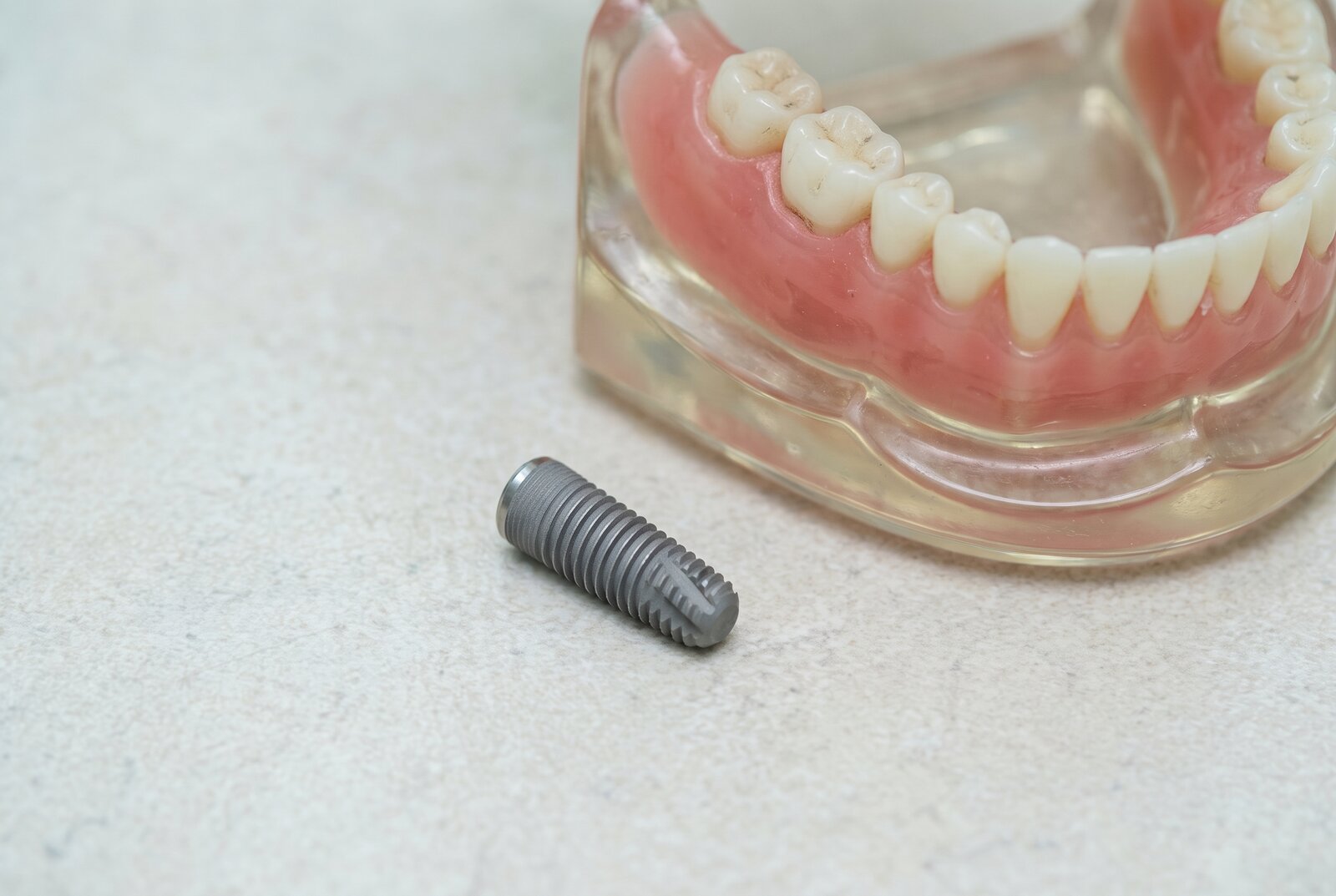
People use the word implant for the whole new tooth, but strictly speaking the implant is only the bottom third of a three piece system. Think of it like a fence post project: the post in the ground, the bracket on top, and the panel everyone sees.
The fixture: your new root
The fixture is a small threaded post, usually titanium, placed in the jawbone where your tooth root used to live. It does the job the root did: anchoring the tooth and carrying chewing forces down into the bone. Once healed, it is completely invisible and completely still, which is exactly what you want from a root.
The abutment: the connector
The abutment threads into the top of the fixture and rises just above the gum line. Its whole purpose is to give the visible tooth something precise to attach to. It is the unglamorous middle child of the system, and nothing works without it.
The crown: the tooth you see
The crown is a custom ceramic tooth shaped, sized and shaded to blend with its neighbors. It attaches to the abutment and is the only part of the whole system anyone will ever see. A well made implant crown is genuinely hard to pick out in a smile, even for dentists. If you have ever had a dental crown on a natural tooth, the visible result is very similar.
Osseointegration: Why Your Bone Accepts Titanium
Here is the part that still feels a little like science fiction. When a titanium fixture is placed in the jaw, your bone does not wall it off the way the body treats most foreign objects. Instead, bone cells grow directly onto the titanium surface, locking the post in place until it is functionally part of your skeleton. Dentistry calls this osseointegration, which is just Latin and Greek for bone joining.
This was discovered somewhat by accident decades ago when researchers found that titanium chambers placed in bone for lab studies could not be removed afterward. The bone had fused to them. That lucky observation became modern implant dentistry, and it is the reason an implant does not wiggle, slip or come out at night in a cup. Your body finishes the installation itself, one bone cell at a time, over a few months of quiet healing.
It is also why the implant timeline cannot honestly be rushed. The waiting period between placing the fixture and attaching the final tooth is not scheduling padding. It is biology doing the one part of the job no dentist can do. We walk through that timeline appointment by appointment in our guide to the dental implant process from consultation to final crown.
What an Implant Does That Other Options Cannot
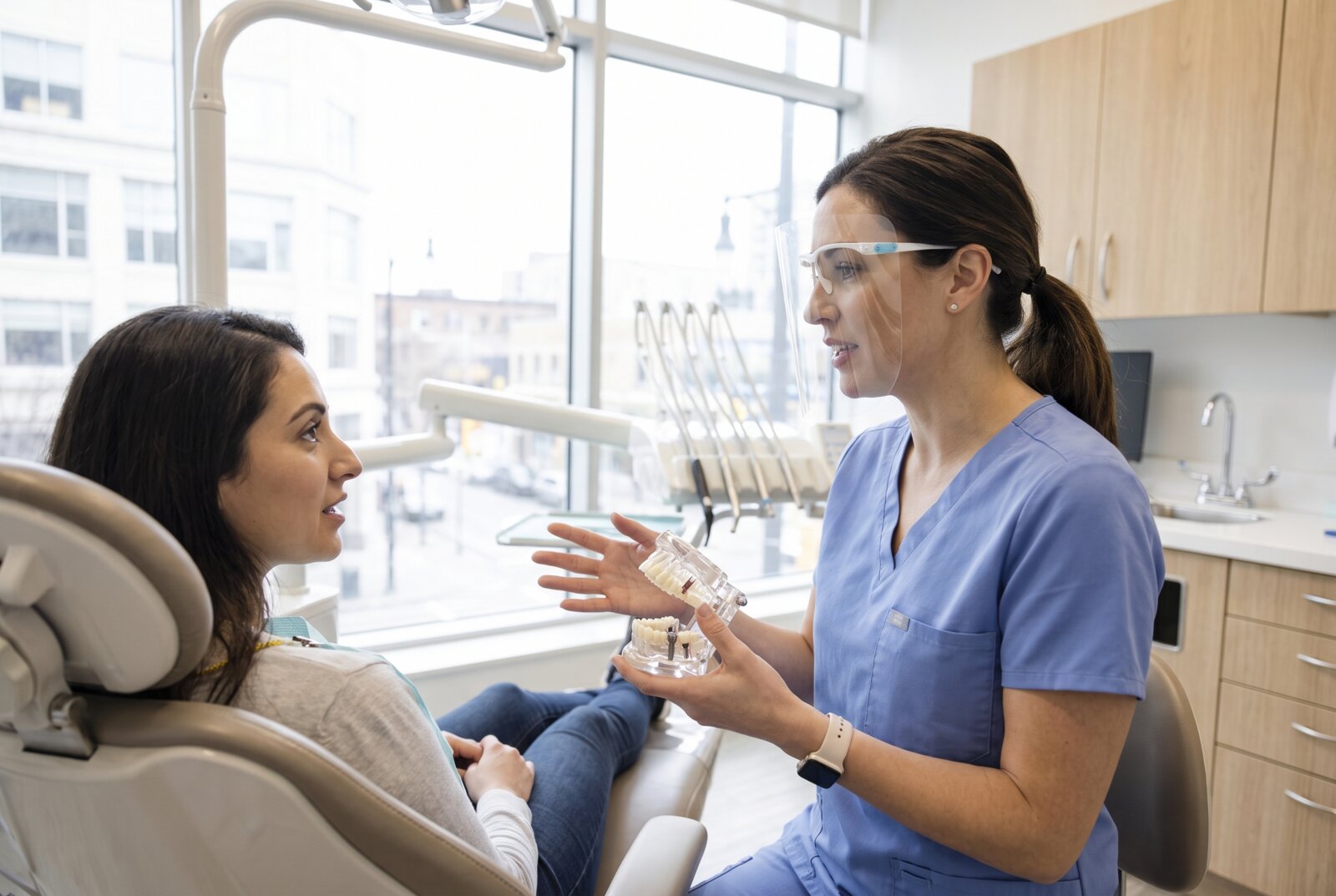
Because the fixture behaves like a root, it keeps doing a root’s second job, the one nobody thinks about: exercising the bone. Jawbone stays healthy the way muscle does, through use. Every time you chew, tooth roots transmit tiny forces into the bone around them, and the bone maintains itself in response.
When a tooth is lost, that stimulation stops, and the bone in that spot begins to slowly resorb. This is why people who have worn dentures for many years often notice their facial profile changing and their denture fit loosening. An implant is currently the only tooth replacement that restores that stimulation, because it is the only one that actually lives in the bone. A bridge sits above the gap. A denture rests on top of the gum. The implant participates.
If you are weighing those options against each other, we wrote a separate honest comparison covering whether implants are worth it next to bridges and dentures.
Who Qualifies for Dental Implants
More people than assume they do. The stereotype of the ideal implant patient as a young, perfectly healthy nonsmoker is outdated. Here is what actually matters when we evaluate a Reseda patient for implants.
Enough healthy bone, or a plan to build it
The fixture needs a certain amount of bone to anchor into, the way a fence post needs enough soil depth. A three dimensional scan shows us exactly what you have. Patients who lost a tooth long ago sometimes need grafting to rebuild the site first. That is a common, routine addition to treatment, not a disqualification.
Healthy gums
Active gum disease is the enemy of implants, because the same bacteria that loosen natural teeth can attack the tissue around an implant. Gum treatment comes first when needed. Getting this in order protects the implant and every other tooth you own.
Reasonably controlled overall health
Conditions like diabetes matter mainly when they are uncontrolled, because healing drives implant success. Well managed patients do fine every day. Bring your full health history and medication list to the consultation, and we will give you a real answer rather than a generic one.
A note on smoking
Smoking slows healing and measurably works against osseointegration. It does not automatically rule you out, but it stacks the odds the wrong way, and the weeks around surgery are a genuinely useful moment to quit or pause.
Age is mostly a red herring
There is no upper age limit for implants. Healthy patients in their seventies and eighties get implants routinely and love them. The only true age restriction runs the other direction: young people whose jaws are still growing need to wait until growth is finished.

What Living With an Implant Is Like
The honest answer is that after a while, patients mostly forget which tooth it is. There is no removal at night, no adhesive, no special tools. You brush and floss it like the tooth it replaced, show up for your regular cleanings, and chew whatever the San Fernando Valley puts in front of you.
Two small differences are worth knowing. First, an implant has no nerve, so it will never get a cavity and will never ache. That sounds like pure upside, but it means the implant cannot warn you about gum problems around it, which makes those routine hygiene visits genuinely important. Second, the ceramic crown is strong but not invincible, so the usual rules about chewing ice apply to it just as they do to natural teeth.
Frequently asked questions
Does getting an implant hurt?
The placement appointment is done with thorough local anesthesia, and most patients report it feels easier than the extraction that preceded it. Soreness afterward is typically managed with over the counter medication for a few days.
How long do implants last?
The titanium fixture, once integrated, can last for decades and often for life with good hygiene. The crown on top lives a rougher life, since it does the chewing, and may eventually need replacement the way any crown might. Caring for it well is the biggest variable you control.
Will it look fake?
A properly planned implant crown is matched to your neighboring teeth in shape and shade, and in most smiles it simply disappears. Front teeth demand extra artistry, which is a planning conversation, not a reason to settle for less.
What does all this cost?
It varies more than any other question here, because bone, location and the number of teeth involved all move the number. We wrote a full straight talk guide to dental implant costs in Reseda, including the insurance and Denti-Cal reality, so you can walk in already knowing how the pricing works.
Can I get an implant if I lost the tooth years ago?
Often, yes. When a tooth has been missing for a long time the jawbone in that spot can shrink, so some patients need a bone graft first to rebuild the site. A three dimensional scan shows exactly how much bone you have and whether grafting is needed.

Ready to See If an Implant Fits Your Smile?
Now you can sketch it on the napkin: a titanium root your bone adopts as its own, a connector, and a ceramic tooth built to disappear into your smile. The engineering is remarkable, but the decision starts with something simple, a scan and an honest conversation.
Our team has placed and restored implants for patients across Reseda, Tarzana, Winnetka, Northridge and Canoga Park, and our dental implants page covers what we offer in house. When you are ready for a real evaluation instead of internet guesswork, call (818) 343-4024 or book through our contact page.
Sources: ADA MouthHealthy: Dental Implants. This article is general information, not a diagnosis. Your dentist can tell you what fits your own teeth.