
The number one reason people put off dental implant treatment is not pain and it is not even price. It is the fog. Somewhere between the first consultation and the finished tooth there are scans, a surgery, a mysterious waiting period and several fittings, and nobody has ever walked them through the whole map. Unknown timelines feel longer than real ones.
So here is the whole map. This is the implant journey the way our Reseda patients actually experience it, visit by visit, including what each appointment is for, roughly how long the stretches between them last, and honestly, how each one feels. By the end you will know exactly where the finish line is before you take the first step. If you want the parts and engineering explained first, read our companion piece on what dental implants are and how they work, then come back for the road trip.
Rather hear the plan for your own tooth? Every journey below starts with the same first step. Call our Reseda office at (818) 343-4024 and we will schedule the consultation that turns this general map into your personal one.
Visit One: The Consultation and the Scan
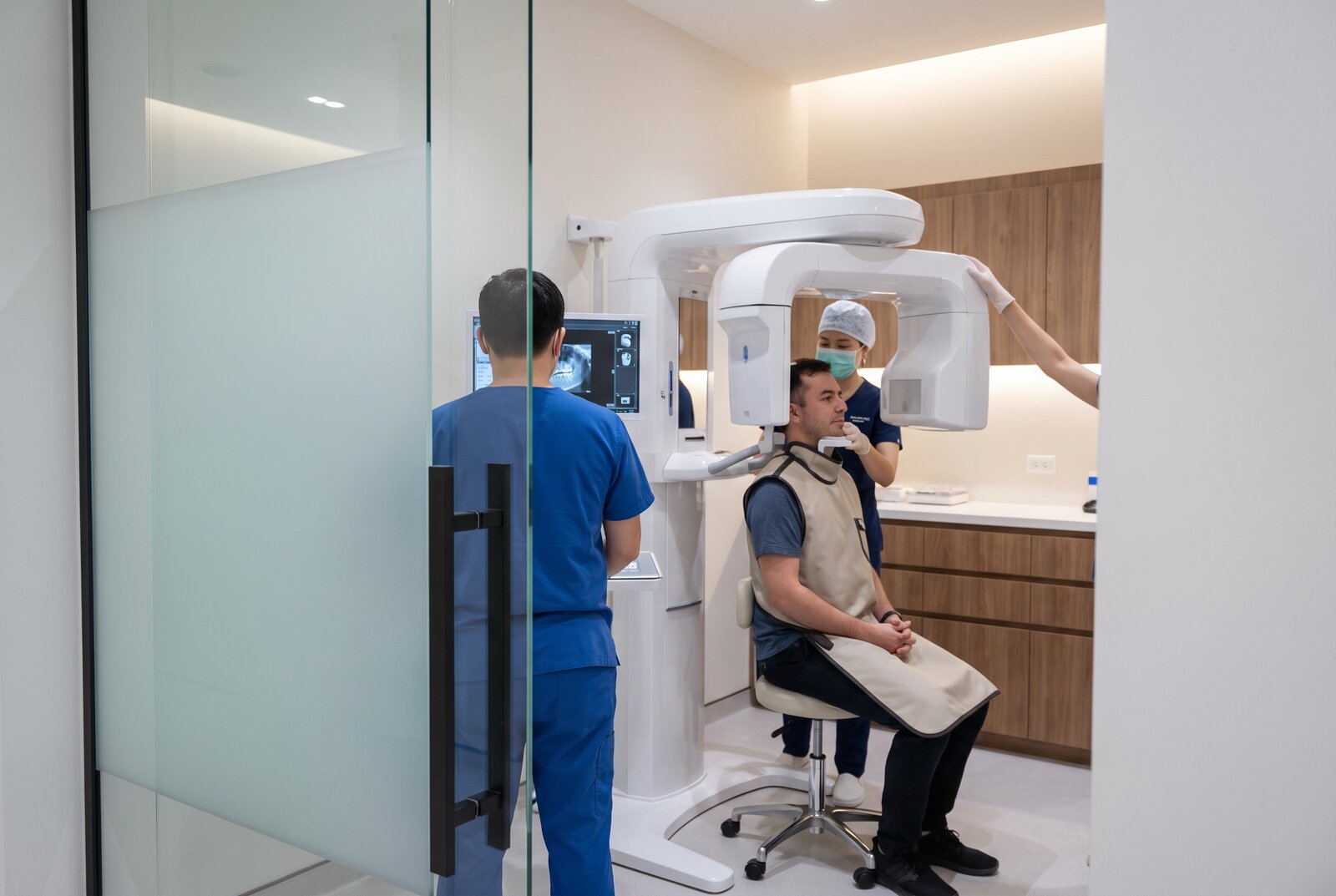
Everything begins with an unhurried appointment that involves zero drilling. We examine the site, review your health history and medications, and take three dimensional imaging of your jaw. That scan is the star of this visit. It shows us the exact height, width and density of your bone, where your nerves and sinuses run, and whether the site is ready for an implant today or needs preparation first.
You leave this visit with the two answers that matter: a written treatment plan listing every stage, and a real cost picture including what your insurance will contribute. If you have not already, read our straight answer on what implants cost in Reseda before this visit, so nothing in that conversation surprises you.
How it feels: like a long exam with a lot of good information. The scan itself takes seconds and is completely painless.
The Optional Detours: Extraction and Grafting
Not everyone takes these exits, but many do, so they belong on the map.
If the tooth is still in place
A failing tooth comes out before an implant goes in. A straightforward tooth extraction is a shorter appointment than most people fear, and in favorable cases the implant can be placed in the same visit, which merges two surgical steps into one. When infection or bone condition says otherwise, the site gets a few months to heal first. Your scan makes that call, not a coin flip.
If the bone needs reinforcement
When a tooth has been gone for years, the bone under the gap has usually thinned. A graft rebuilds the site with material that your own bone gradually replaces, and it typically adds a few months of quiet healing to the timeline. It is routine, it is done under the same local anesthesia, and it is the difference between an implant that lasts decades and one placed on a shaky foundation.
How it feels: a day or two of soreness managed with over the counter medication, then mostly forgetting about it while biology works.
Placement Day: The Implant Goes In
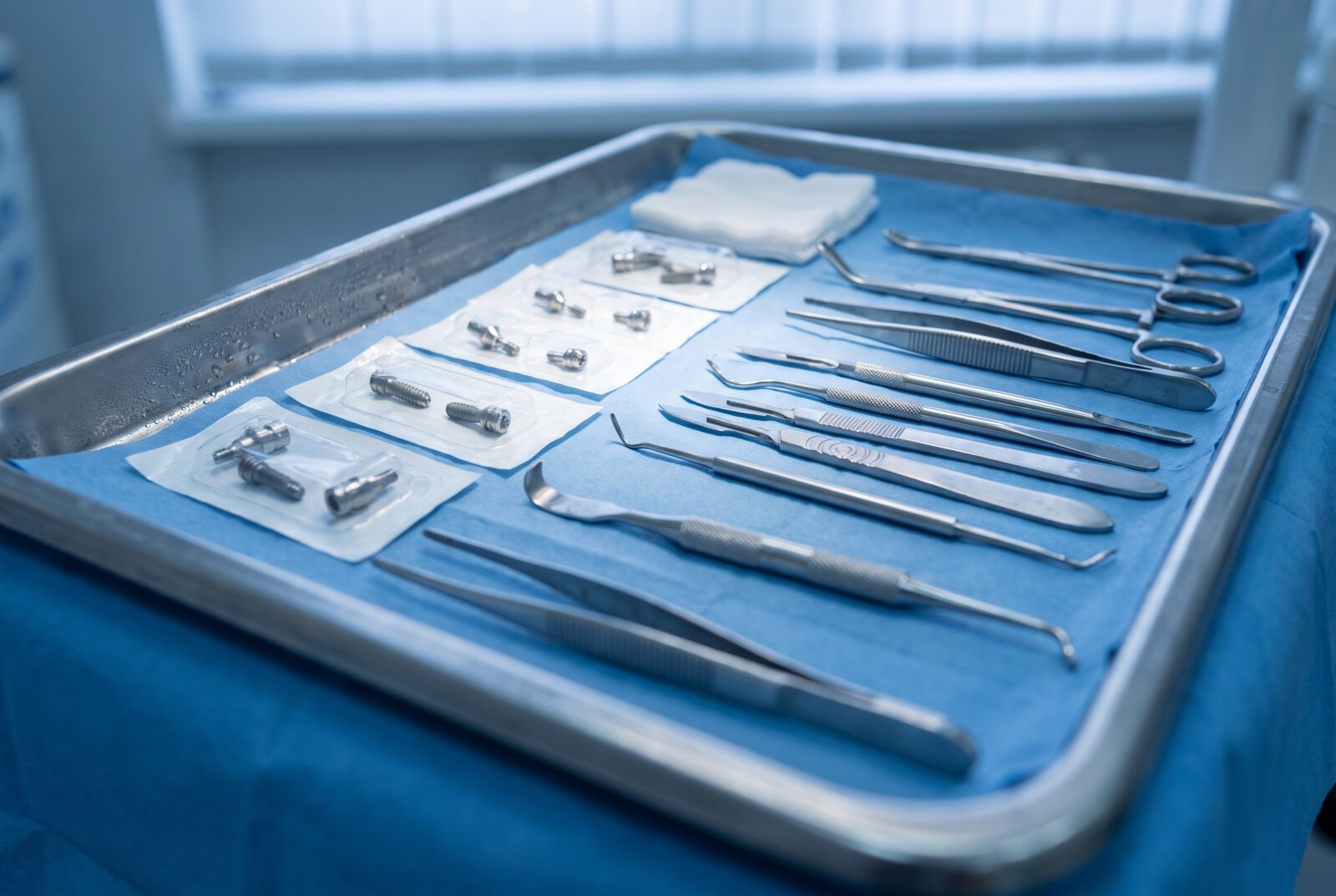
This is the appointment people lose sleep over, and it is almost always the anticlimax of the whole journey. The area is numbed thoroughly, a small opening is made in the gum, a precise channel is prepared in the bone, and the titanium post is threaded gently into place. A single implant usually takes about an hour in the chair, and much of that is preparation and verification rather than surgery.
Two things surprise patients here. First, bone itself has very few nerve endings of the kind that report sharp pain, so the sensation is pressure and vibration rather than hurt. Second, the recovery is milder than expected. Most patients are back to normal routines within a day or two, with soreness that responds to ordinary medication and a short list of soft food suggestions. If dental anxiety is part of your story, tell us at the consultation and we will plan comfort options ahead of time rather than improvising on the day.
Depending on the case, you may leave with a temporary tooth for appearance, especially in the smile zone. Nobody sends you out the door with a conspicuous gap and a wave.
How it feels: pressure, not pain, then a couple of days of manageable soreness. Ibuprofen weather, not vacation days.
The Quiet Months: Osseointegration
Now comes the stretch that no dentist can shorten and no patient can feel happening. Over the following months, your bone grows onto the titanium surface and locks the post in place. This fusion, called osseointegration, is what will let your new tooth chew for decades, and it is the entire reason the implant timeline is measured in months instead of weeks.
From your side, this phase is wonderfully boring. You eat carefully around the site at first, keep it clean the way we show you, and come in briefly so we can confirm healing is on track. There is no pain during this period, just waiting. Patients who understand why the wait exists tend to relax into it; the ones who were never told why tend to worry. Consider yourself told: the wait is the treatment.
One practical tip for this stretch: keep the rest of your mouth in great shape. The healthiest implant sites we see belong to patients who used the waiting months to catch up on cleanings and any small fillings, so the new tooth arrives into a healthy neighborhood.
How it feels: like nothing at all, which is exactly what success feels like at this stage.
The Reveal: Abutment and Impressions
Once the post is solid, a small connector called an abutment is attached to it, rising just above the gum line. In some cases this needs a minor gum adjustment; in many, it is a simple attachment visit. The gum then shapes itself around the abutment for a short period, forming the natural looking collar your final tooth will emerge from.
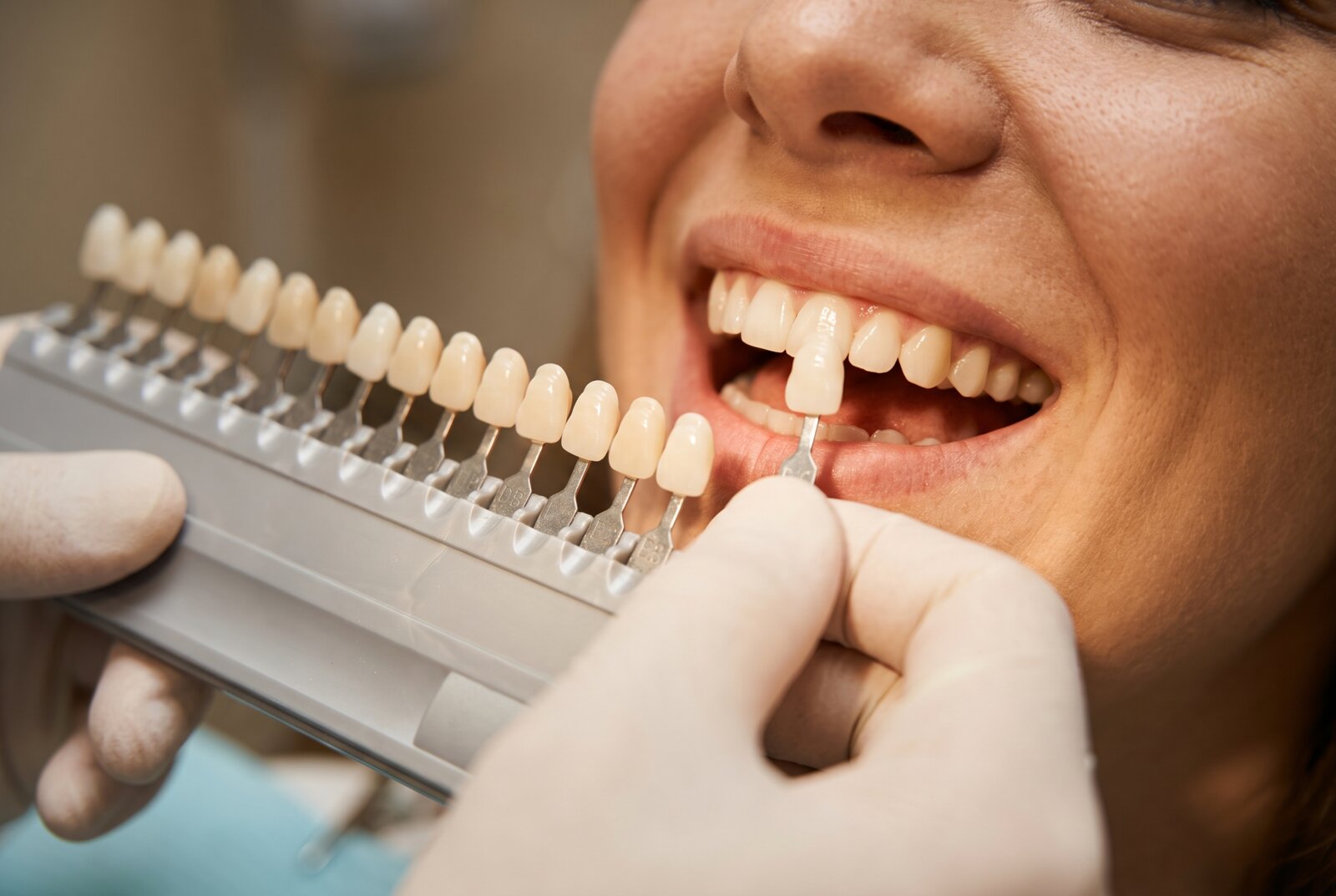
Then comes the tailoring appointment. We capture a precise impression or digital scan of the abutment and the surrounding teeth, and we match the shade of your neighboring enamel so the new crown belongs in your smile rather than merely visiting it. That information goes to the dental lab, where your tooth is custom built.
How it feels: easy appointments with no surgery. The scan and shade matching are the fun part, and patients can start to see the finish line from here.
The Finish Line: Your Final Crown
The last appointment is the shortest and the best. The custom crown is attached to the abutment, the bite is checked and fine tuned until it feels natural against the opposing teeth, and the contacts against neighboring teeth are adjusted so floss snaps through the way it should. The visible result is a tooth, and if we did the shade work well, it is a tooth even you will have trouble picking out in the mirror later. It works like any dental crown, except this one is anchored on a root that will never decay.
Bite adjustments in the first week or two are normal and quick, so speak up about any spot that feels tall. Then the appointment schedule drops back to what it always was: cleanings and checkups.
How it feels: like getting your tooth back. Most patients say the strangest part is how quickly they stop thinking about it.
Life After: Protecting the Investment
An implant is famously low maintenance, but low is not zero. Brush it, floss around it daily, and keep your hygiene visits, because the gums around an implant need the same defense your natural teeth do. Remember that the implant has no nerve, so it will never ache to warn you when something is wrong around it, which makes those routine checkups the implant’s early warning system. If you grind your teeth at night, tell us; a night guard protects your crown along with the rest of your mouth. Whether the years of service ahead justify the months of process you just read about is exactly the question we tackle in our honest comparison, are dental implants worth it. Spoiler: for most patients who commit to the journey, emphatically yes.
Your Map, With Your Dates on It
Every timeline above stretches or shrinks with your biology: some Reseda patients go from consultation to final crown in a few months, while cases with extractions and grafting take longer. The only way to put real dates on the map is the scan at visit one.
We guide patients from Reseda, Tarzana, Winnetka, Northridge and Canoga Park through this exact journey all the time, and the details of what we offer are on our dental implants page. When you are ready to see your own map, call (818) 343-4024 or reach us through our contact page. The fog lifts at the first appointment.